
“I can’t do sport.” – “I don’t have time.” – “Something always comes up.” Does that sound familiar?
Behind these sentences there are often real hurdles: pain in the knees and back, getting tired quickly, embarrassment at the gym or a lack of offers for people with a high body weight. These hurdles are real. Nevertheless, with very few exceptions, everyone can do something; you just have to find the right way to start.
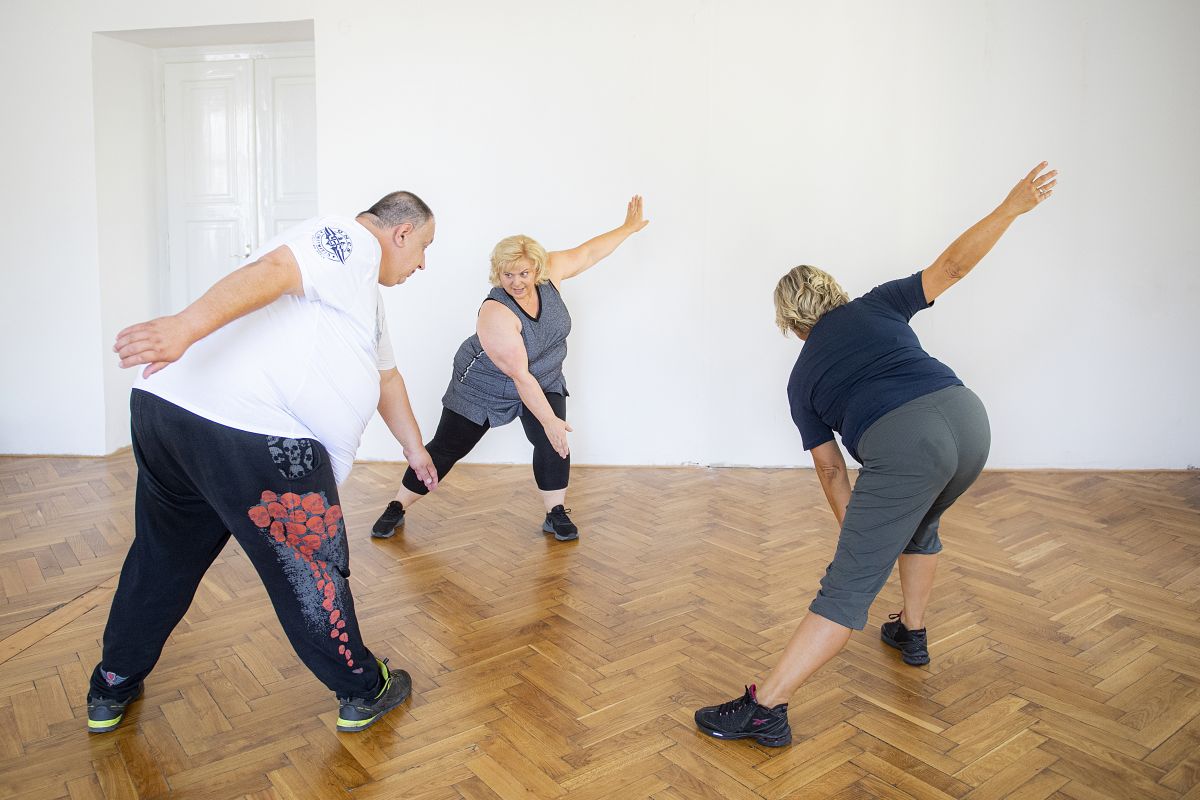
What physical activity can and cannot do
To be honest: hardly anyone loses a lot of weight through exercise alone. In studies, the weight loss from training was 1.5 to 3.5 kilos on average.[1] But physical activity is essential for other reasons. It maintains and builds muscle, relieves the heart and circulation, improves blood sugar, lifts your mood and plays a crucial part in keeping a reduced weight. These benefits arise even if the scales hardly move.[1]
How much makes sense?
- For weight loss, the guideline recommends 30 to 60 minutes of physical activity a day.[1]
- In general, the World Health Organization recommends 150 to 300 minutes of moderate-intensity activity per week, meaning that you get a little out of breath but can still hold a conversation.[1]
- In addition, exercises that strengthen the muscles on at least two days a week.[1]
These are goals, not starting conditions. If you have hardly been active so far, start with a few minutes and build up slowly. Everyday activity counts too: taking the stairs instead of the lift, getting off the bus one stop earlier, a walk after a meal.[1]
Caution
Before you start, have a doctor check whether there are reasons against certain kinds of strain, for example heart disease or severe joint problems.[1] Sore muscles at the beginning are normal. Joint pain, on the other hand, should be taken seriously and mentioned. With professional guidance, the strain can be increased in a way that does not harm you.
Which sport suits me?
That depends on your physical situation. Here are a few examples:
- Rehabilitation sport (Reha-Sport): for very high body weight, chair exercises, for example, have proven effective. For people with more freedom of movement there are various Reha-Sport courses. Your doctor can prescribe Reha-Sport; your health insurance fund must approve the prescription.
- Nordic walking, walking and brisk walking are good for getting started because you set the pace yourself.
- Water aerobics is also offered specifically for people with obesity. Many things are easier in water, and in XXL courses you are among like-minded people.
- Muscle building with your own body weight, resistance bands or on machines, ideally with guidance.
- Cycling is gentle on the joints, including on an exercise bike.
If you have joint problems, it is worth reading the page Related conditions (section on osteoarthritis).
Remember
Any physical activity is better than none at all!
Sources
- S3-Leitlinie Prävention und Therapie der Adipositas (AWMF 050-001), version 5.0, October 2024, register.awmf.org (in German), pp. 157–158 (recommendation 5.19 and WHO recommendations on physical activity), p. 159 (recommendations 5.20 and 5.21), p. 160 (recommendation 5.22).