
Obesity is often seen only as a weight problem. Yet the disease can affect almost every organ: metabolism, heart and circulation, liver, breathing, joints and mental health too.[1]
When people are young, the consequences are often not yet noticeable. Many think: I am carrying a few extra kilos, but otherwise I feel fine. Over time, however, related conditions creep in. They are often detected late and sometimes need complex treatment.
Important: not everyone with obesity develops these conditions. How high the risk is depends mainly on how severe the obesity is and how long it has existed. Genes and other risk factors such as smoking also play a role.[1]
| Risk with obesity | Conditions |
|---|---|
| more than 3 times higher | Type 2 diabetes, sleep apnoea, fatty liver, knee osteoarthritis |
| 2 to 3 times higher | High blood pressure, raised blood lipids, coronary heart disease, stroke, gout, heartburn (reflux), gallstones |
| up to 2 times higher | Hip osteoarthritis and back pain, reduced fertility, polycystic ovary syndrome (PCOS), kidney stones, urinary tract infections, cancer |
Sleep apnoea syndrome
With sleep apnoea, breathing stops again and again during sleep, each time for at least 10 seconds and sometimes for more than a minute. During this time the organs and the brain receive less oxygen. The body releases stress hormones, and sleep is interrupted again and again.
The consequences: daytime tiredness, problems concentrating and a higher risk of high blood pressure and cardiovascular disease. Poor sleep also affects the metabolism and can encourage weight gain. The more severe the obesity, the more common sleep apnoea is.[1]
Loud snoring with pauses in breathing that your partner notices, and severe tiredness during the day, are typical signs. Talk to your doctor about it: sleep apnoea can be examined and treated well.
Type 2 diabetes
There is a particularly close link between obesity and type 2 diabetes. The risk rises from a BMI of 25. About 80% of adults with type 2 diabetes are overweight or have obesity.[1] Obesity is almost four times as common in people with diabetes as in people without diabetes.[2]
Poorly controlled diabetes damages blood vessels and nerves over time, with consequences for the heart, kidneys, eyes and feet. The good news: losing weight often improves blood sugar considerably. With greater weight loss, especially after obesity surgery, type 2 diabetes can even go into remission.[1]
Fatty liver
Fatty liver disease (medical term: MASLD) affects at least one in three people with obesity. For a long time it causes no symptoms and therefore often goes unnoticed. It is closely linked to impaired insulin action and increases the risk of cardiovascular disease. In some of those affected, cirrhosis of the liver develops over the years, and rarely liver cancer.[1]
Heart and circulation
High blood pressure is often the first to appear. It strains the blood vessels and puts heavy demands on the heart. Raised blood lipids can narrow the blood vessels, so that the heart and brain receive a poorer supply. This can lead to heart attack and stroke. Heart failure, atrial fibrillation and thrombosis are also more common with obesity.[1]
Fat in the abdomen is particularly closely linked to these risks. When abdominal fat, high blood pressure, raised blood lipids and raised blood sugar occur together, this is called metabolic syndrome.
Joint pain and osteoarthritis
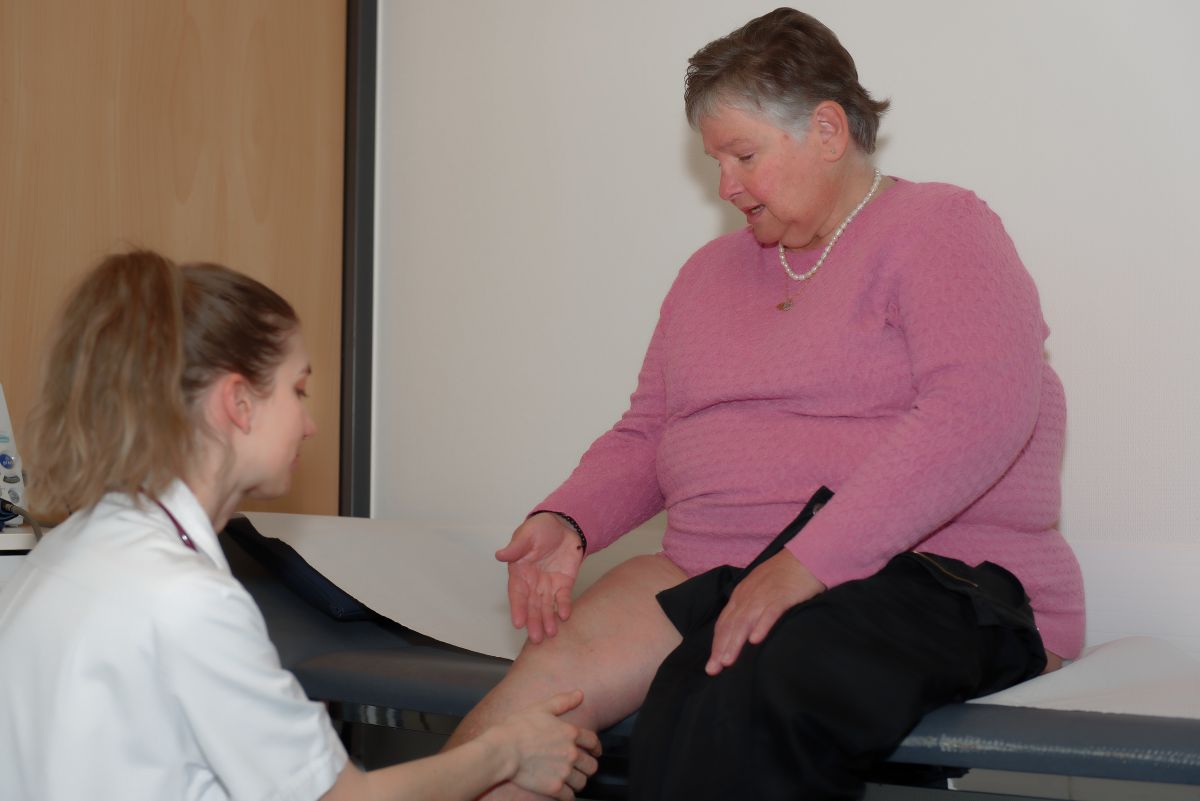
Osteoarthritis, that is wear and tear of the joints, is one of the most common related conditions of obesity. The knees are particularly affected: with a BMI of 30 or more, the risk of knee osteoarthritis is about four and a half times as high as with normal weight.[1][3] Hips and back also suffer more often.
Osteoarthritis often only shows after many years. The cause is not just the mechanical strain on the joints. Inflammatory substances from fatty tissue also play a role.
What cannot be reversed
To be honest: cartilage that has been lost does not grow back. There is currently no medication that stops or reverses joint wear.
What still helps a lot
But that does not mean that losing weight is pointless. If you lose more than 5% of your weight, you can already move more easily in everyday life.[4] With a weight loss of around 10%, pain and the load on the knee joint fall considerably, especially when weight loss is combined with physical activity.[5]
- Exercise despite osteoarthritis: joints need movement to stay nourished. Gentle options for the joints are, for example, cycling, water aerobics or rehabilitation sport (Reha-Sport) (see Physical activity).
- Strengthen your muscles: strong thigh muscles take pressure off the knee.
- Act early: the sooner you do something, the more mobility you keep.
- Before a joint replacement: people with obesity receive an artificial joint more often and have a higher risk of complications. Talk to your doctor about whether losing weight before the operation makes sense.[1]
Cancer
Obesity is an independent risk factor for at least 13 types of cancer, including bowel cancer, breast cancer after the menopause, and cancer of the womb, kidney, liver, pancreas, gallbladder and thyroid.[6] Hormones and inflammatory substances from fatty tissue play a role, especially from abdominal fat, which is not always visible from the outside. In Germany, an estimated 6.9% of all new cancer cases can be attributed to obesity.[1]
An increased risk does not mean that you will become ill. But it does mean that screening examinations (Vorsorgeuntersuchungen) are particularly important for you. Many people with obesity avoid them, often because of bad experiences in doctors’ practices.[1] Please do not let that stop you.
Other consequences
- Heartburn and reflux disease
- Gallstones and inflammation of the gallbladder
- Kidney disease, kidney stones, urinary tract infections and urinary incontinence
- Reduced fertility in women and men, and more complications in pregnancy (see Planning a family and pregnancy)
- Mental strain such as depression and anxiety (see Mental health)
Good to know
Even a weight loss of 3 to 5% measurably improves many related conditions. The greater the weight loss, the greater the benefit usually is, up to a longer life.[1] So it does not have to be your “ideal weight” straight away.
Sources
- S3-Leitlinie Prävention und Therapie der Adipositas (AWMF 050-001), version 5.0, October 2024, register.awmf.org (in German), pp. 15–19 (related conditions, table 3), pp. 22–23 (benefits of weight loss), pp. 32–33 (stigma and screening).
- Robert Koch Institute: Diabetes mellitus und Begleiterkrankungen. Journal of Health Monitoring 2021;6(2). rki.de (PDF, in German)
- Jiang L et al. Body mass index and susceptibility to knee osteoarthritis: a systematic review and meta-analysis. Joint Bone Spine 2012;79:291–297. doi:10.1016/j.jbspin.2011.05.015
- Christensen R et al. Effect of weight reduction in obese patients diagnosed with knee osteoarthritis: a systematic review and meta-analysis. Ann Rheum Dis 2007;66:433–439. doi:10.1136/ard.2006.065904
- Messier SP et al. Effects of intensive diet and exercise on knee joint loads, inflammation, and clinical outcomes among overweight and obese adults with knee osteoarthritis: the IDEA randomized clinical trial. JAMA 2013;310:1263–1273. doi:10.1001/jama.2013.277669
- Lauby-Secretan B et al. Body Fatness and Cancer – Viewpoint of the IARC Working Group. N Engl J Med 2016;375:794–798. doi:10.1056/NEJMsr1606602